
English/Ελληνικά
24-HOUR WILDLIFE RESCUE PHONE NUMBER: +30 697 679 7070
A Summary of 2025 at Naxos Wildlife Protection
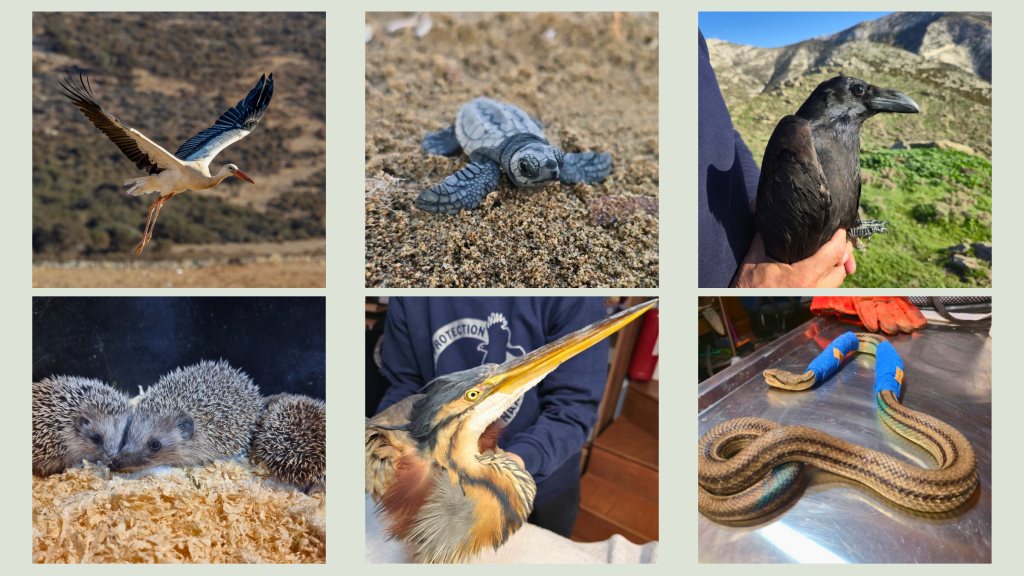
What we did, what we achieved, the animals we cared for, those that returned home, those that didn’t, the people we reached, and the turtle hatchlings that made it to the sea.
We wouldn’t have done any of this without everyone who stood by us: those who called when they found a wild animal in need, who didn’t look away, who reported illegal activities, who donated so we could offer the best possible care to our wild patients, who volunteered and who took part in our educational projects.
Our goal is to create a world where humans and wildlife live and co-exist in harmony, where there is respect, responsibility and care.
No matter the obstacles, we will keep fighting for a world where nature and wildlife are not the enemy, not a dumping ground and not something to be exploited, but something to be protected, understood and passed on to future generations.
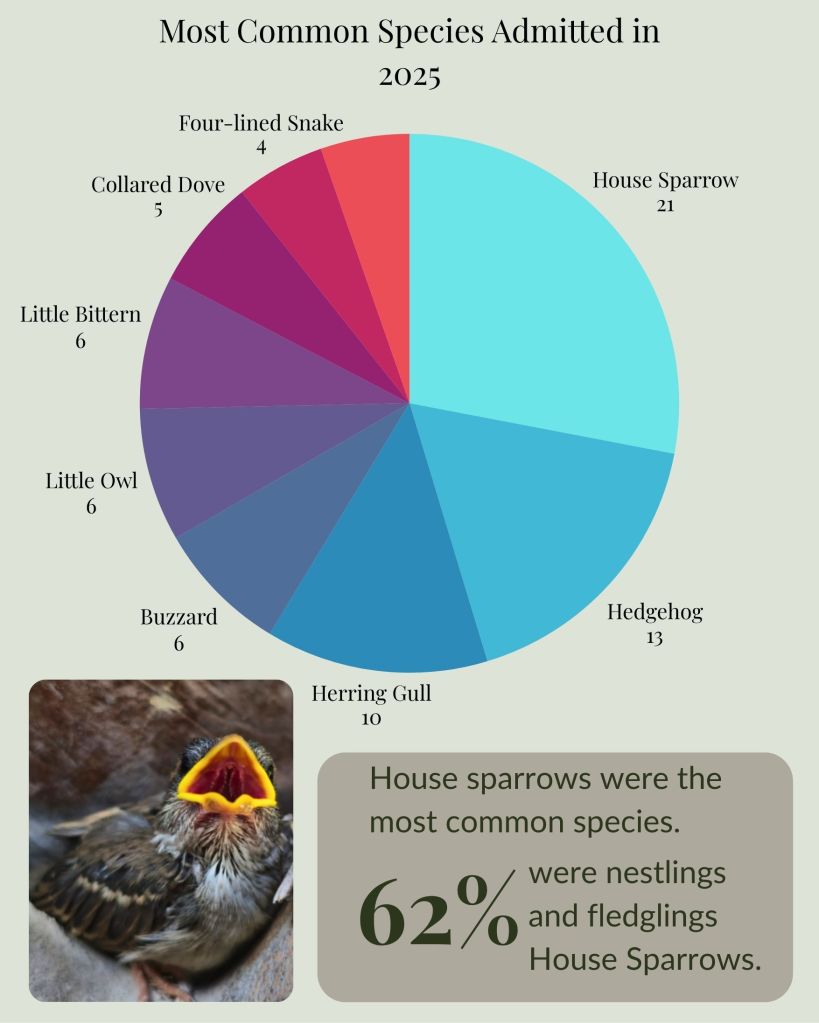
In 2025, 134 wild animals were admitted at our Wildlife Rescue & First Aid Station represented by 50 different species.
Out of the 134, 66 animals were successfully rehabilitated and released back to their natural habitat, 14 were transferred to a Wildlife Rehabilitation Center for further hospitalization and 46 animals passed away due to the severity of their injuries.
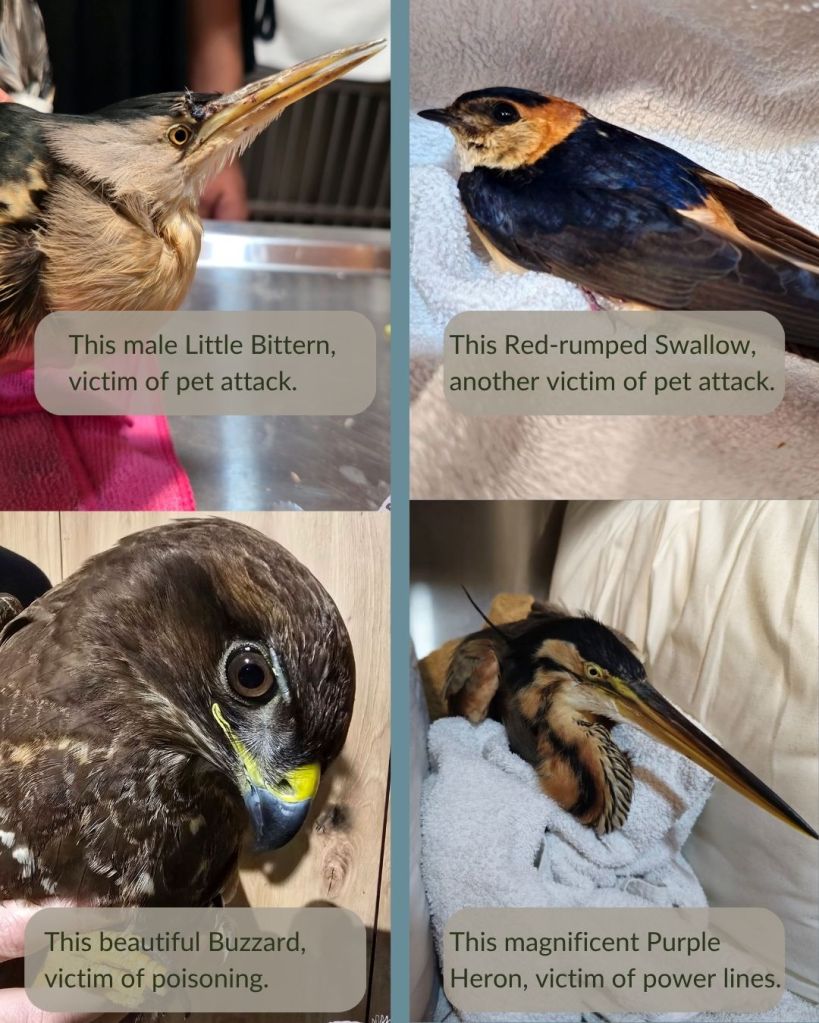
Five species were admitted for the first time at our First Aid Station: a European Roller (Coracas carrulus), a Black Raven (Corvus corax), a Common Cuckoo (Cuculus canorus), a Purple Heron (Ardea purpurea) and a European Red-rumped Swallow (Cecropis rufula).
We rescued and successfully reintegrated four sea turtles: three Loggerhead turtles and one green turtle.
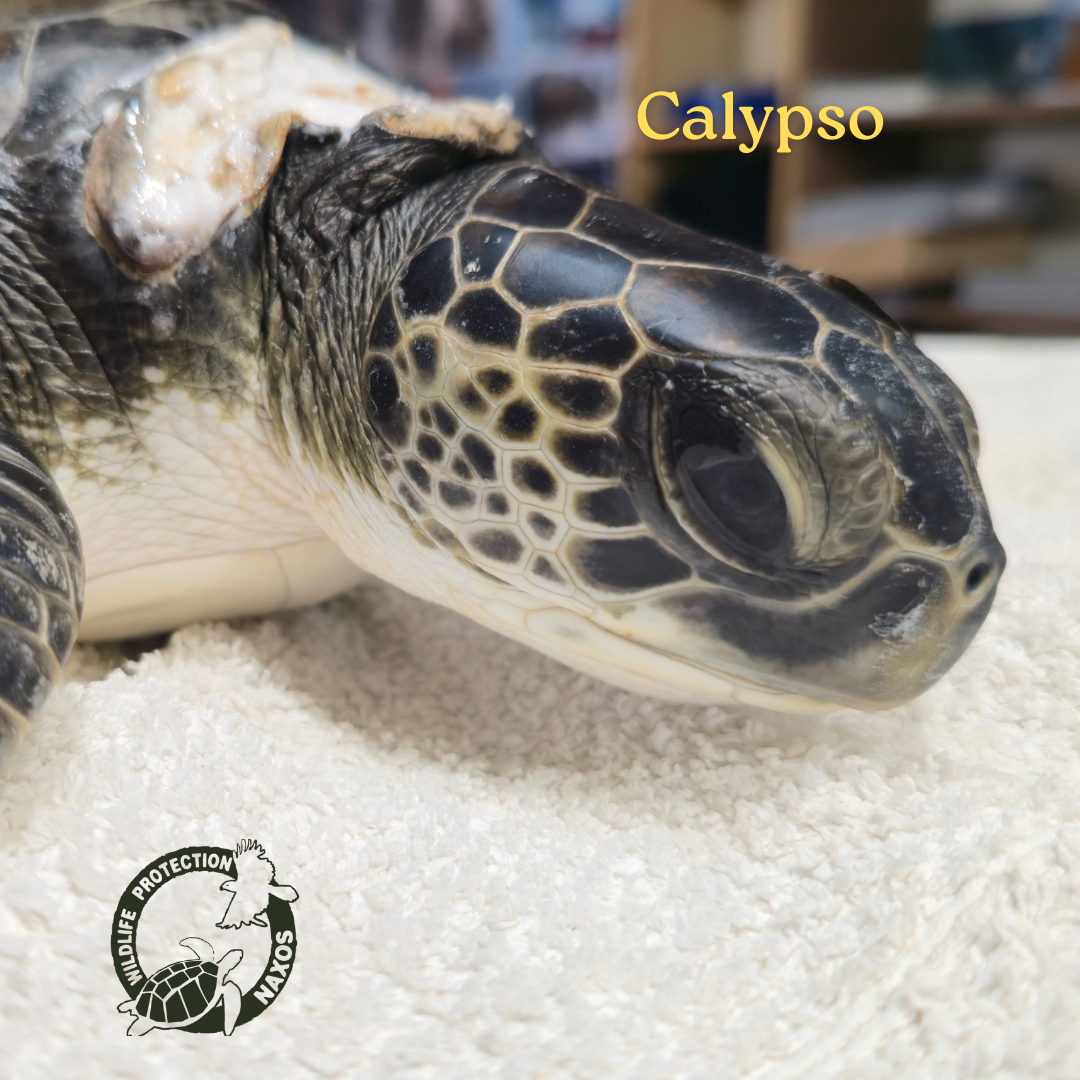
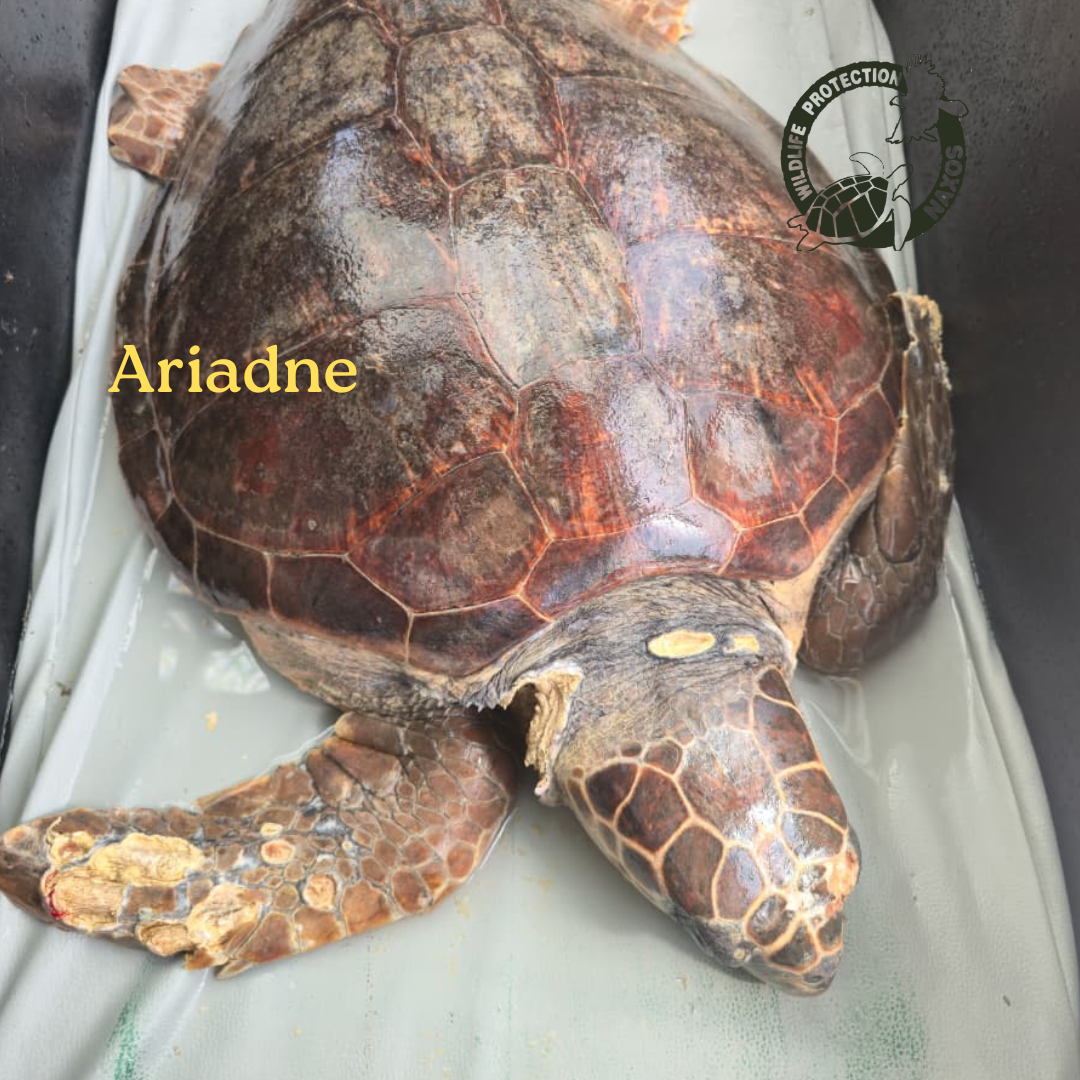
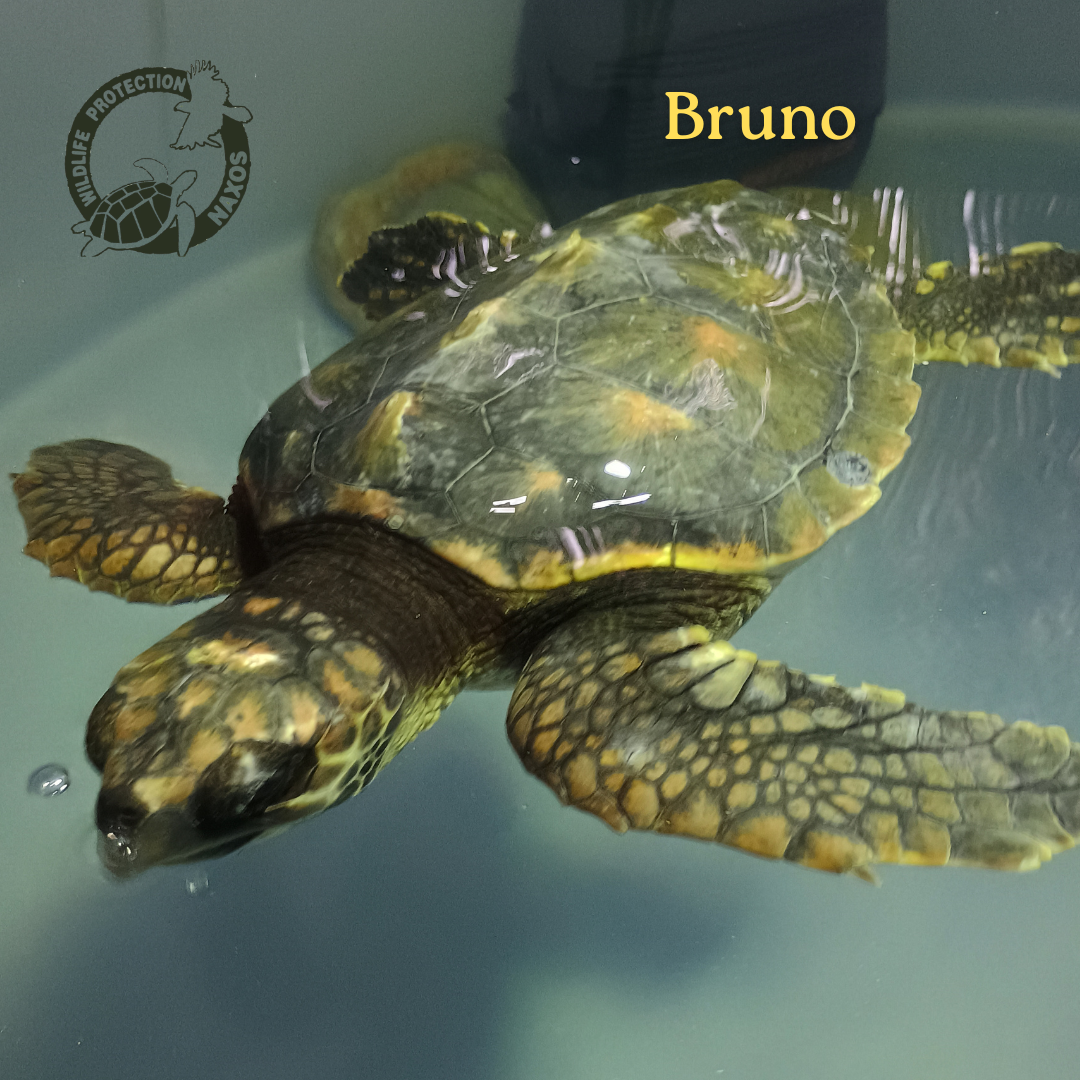
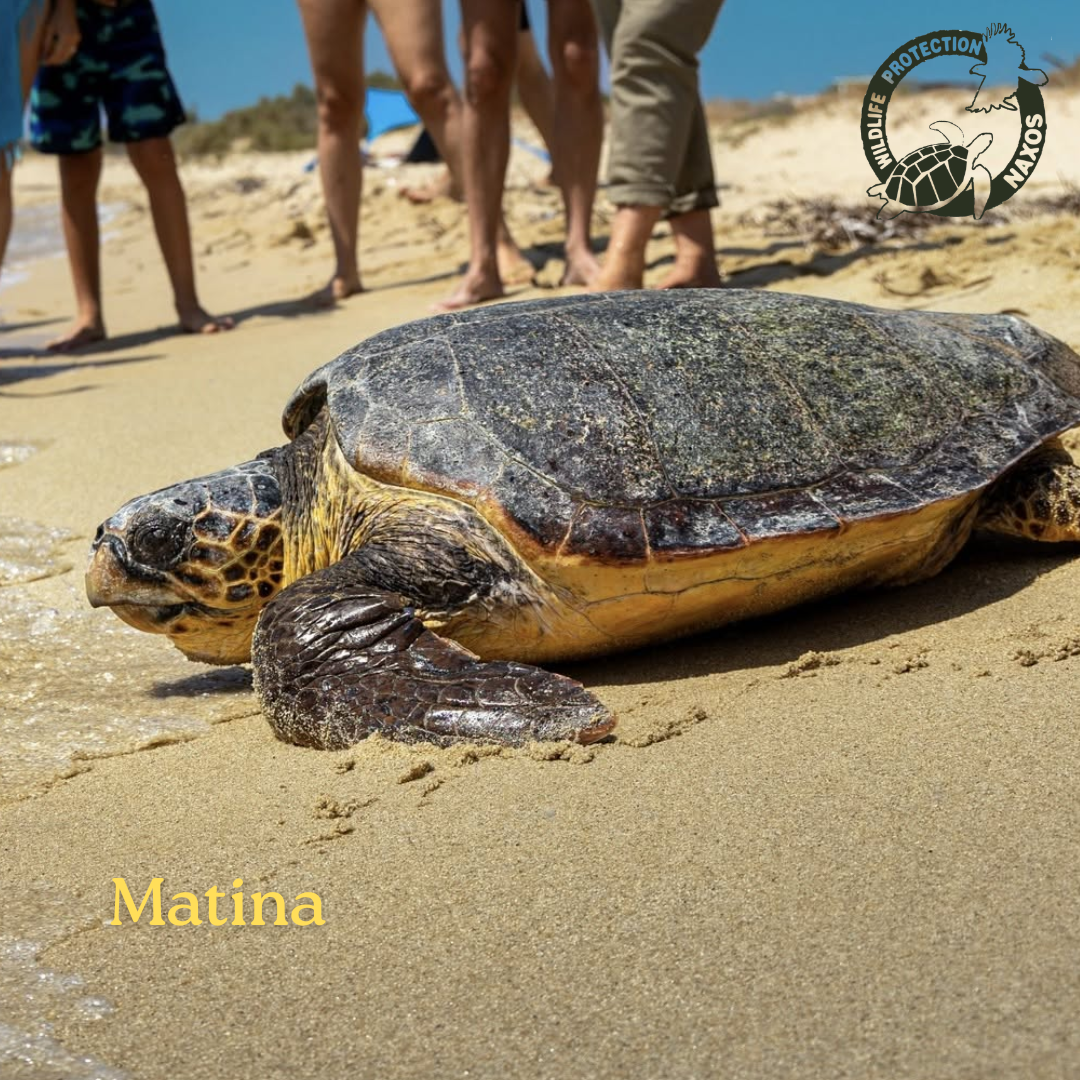
Click on each turtle to see their release during the summer 2025!
Stranded sea turtles
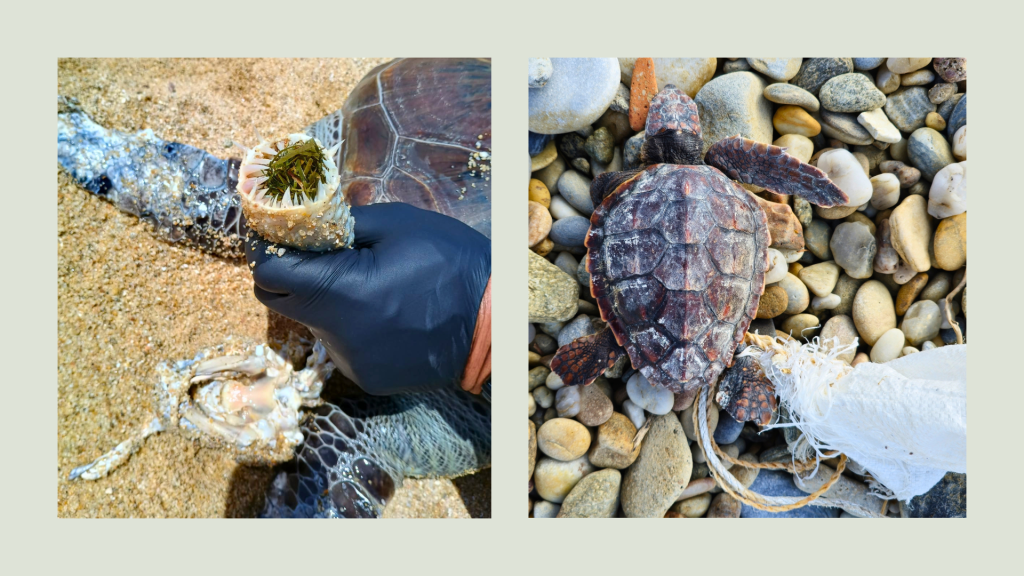
Part of our work on sea turtle conservation is recording and collecting data on any deceased sea turtle that washes ashore. During 2025 alone, on the beaches of Naxos, 33 deceased sea turtles were recorded (30 belonging to the species Caretta caretta and three Chelonia mydas). More than half of these turtles were found in an advanced state of decomposition limiting the ability to determine the cause of death. Seven turtles were found missing the head: while this can occur post-mortem due to decomposition processes or scavenging, in one case the carcass was in a very good condition and the neck and eosophagus presented a clean cut, indicating a case of deliberate human-induced mortality.
A necropsy performed on a freshly stranded individual determined drowning as the cause of death. This is unfortunately common, when sea turtles get caught in fishing gear preventing them from surfacing to breathe resulting to drowning. One dead turtle was found entangled in a plastic sack, while two individuals bore injuries consistent with collision with vessels.
Although defitive conclusions cannot be drawn for the majority of cases due to decomposition, the findings point toward multiple anthopogenic pressure, including fishing activity, marine pollution, boat collisions and intentional harm as contributing factors to sea turtle mortality in the wider area.
Environmental Awareness Projects
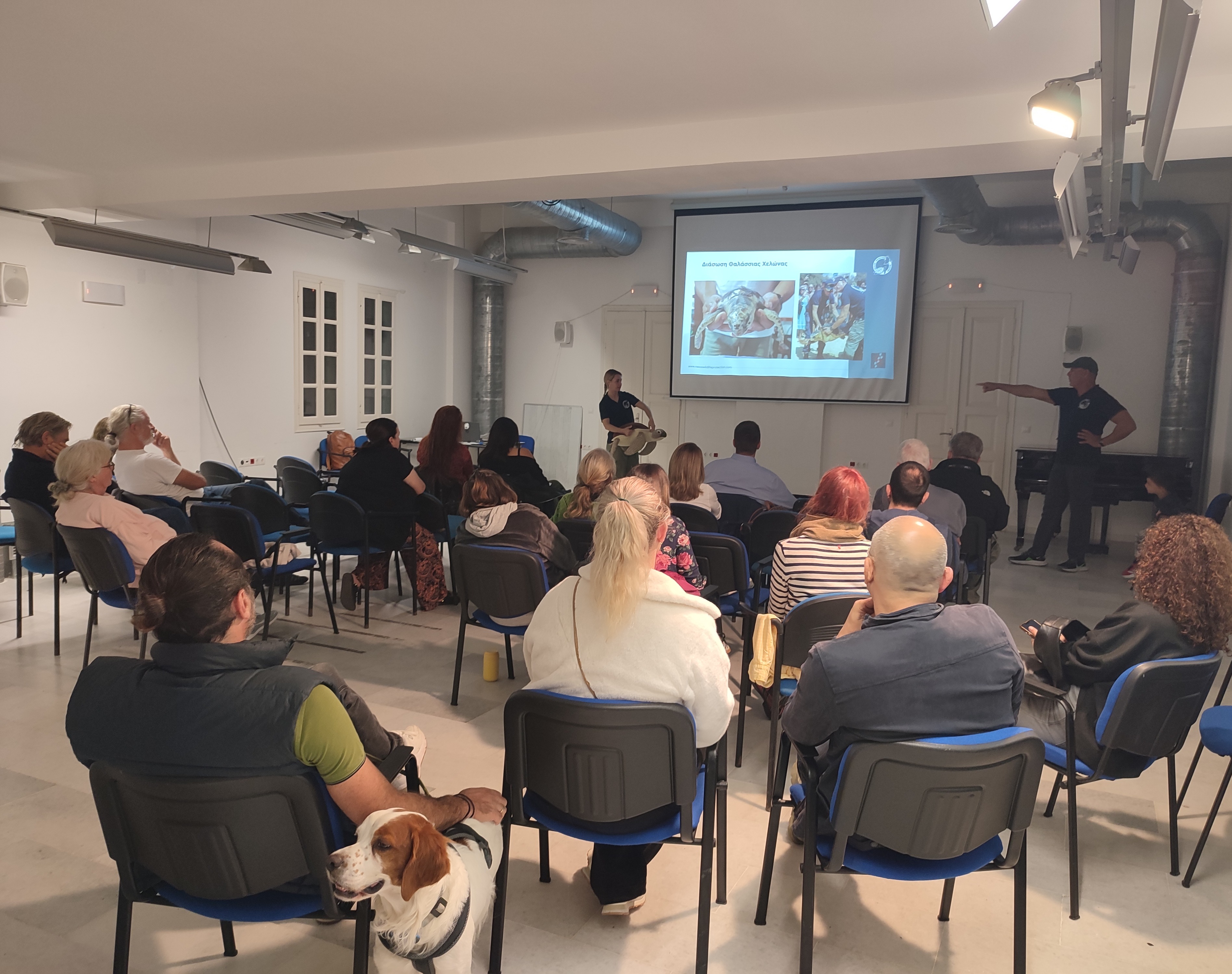
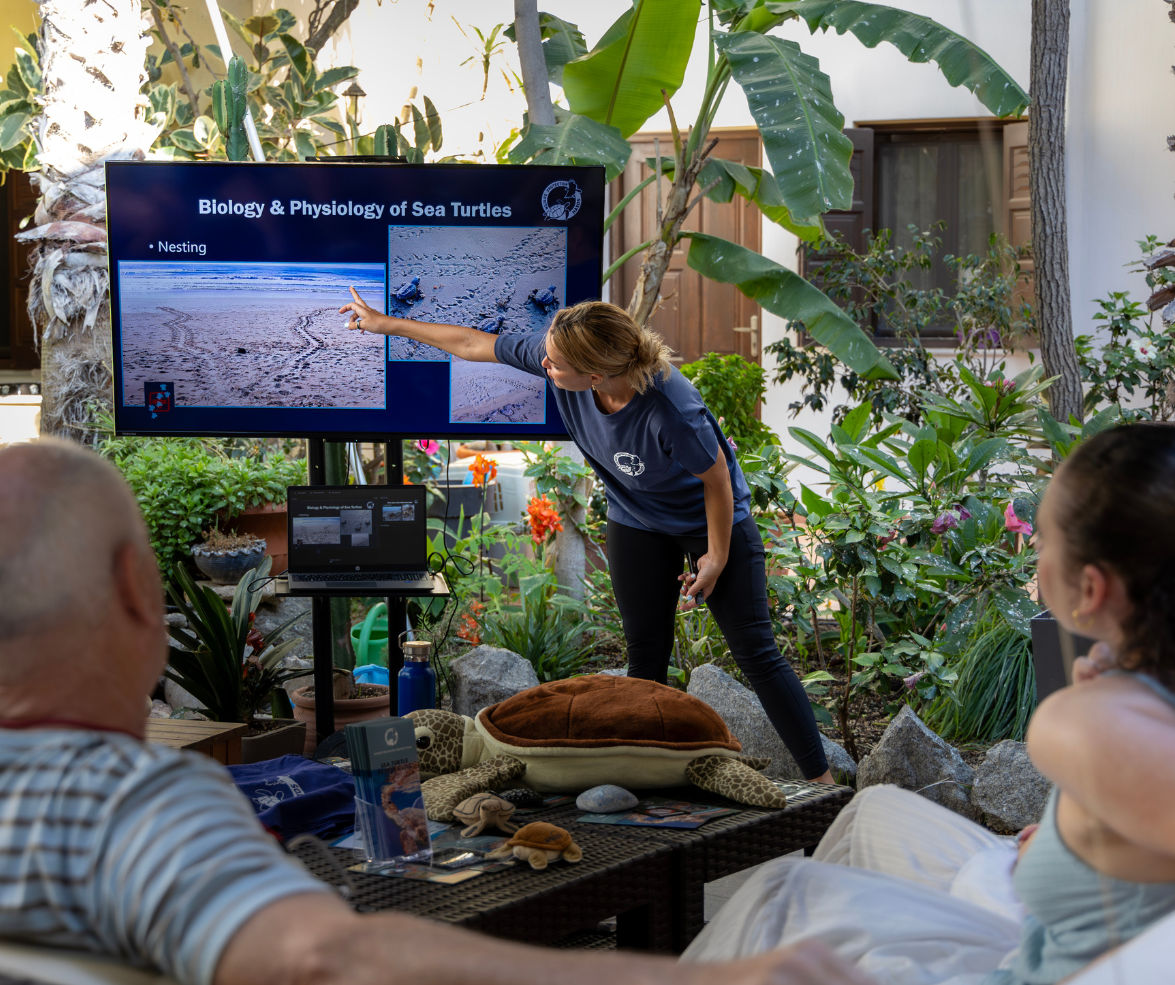
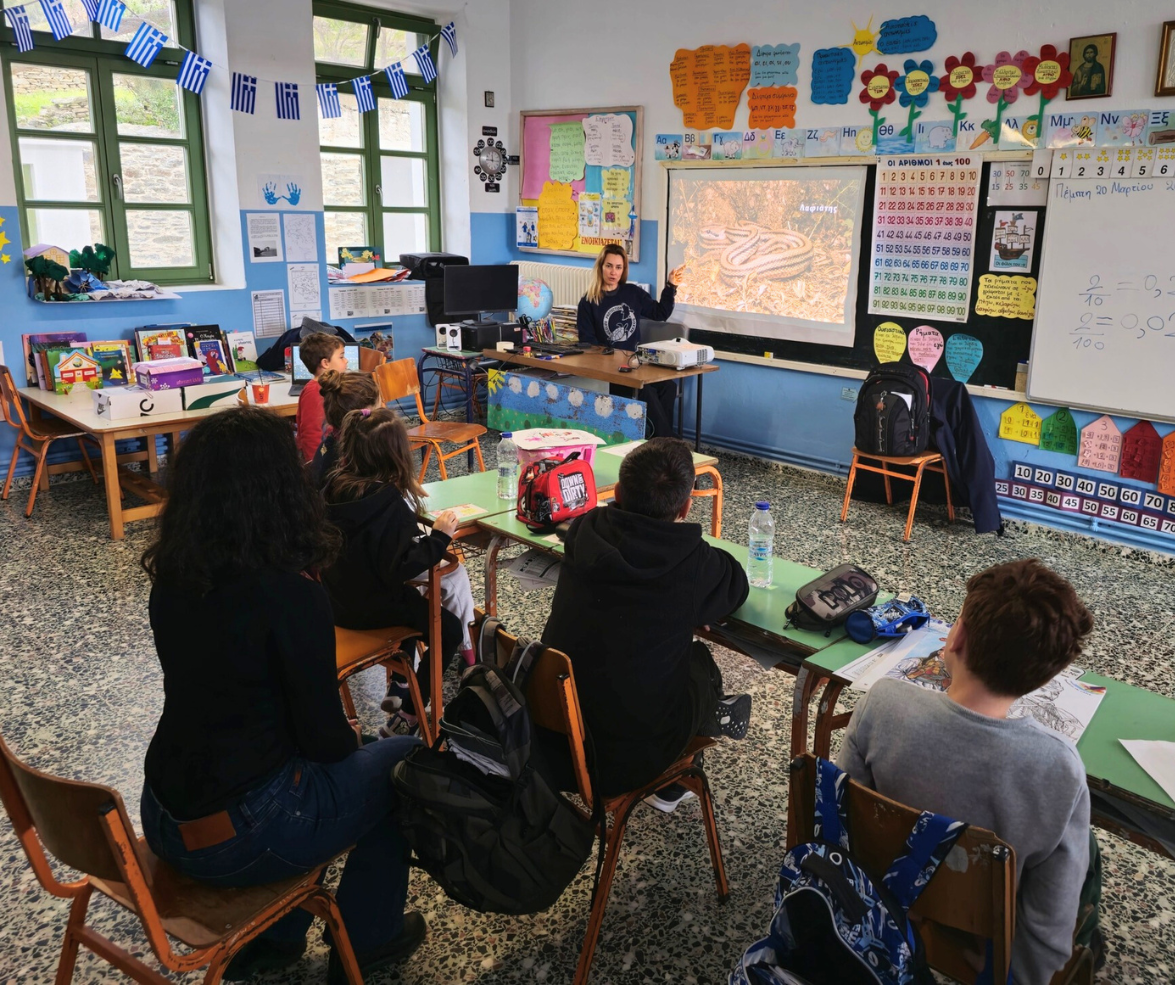
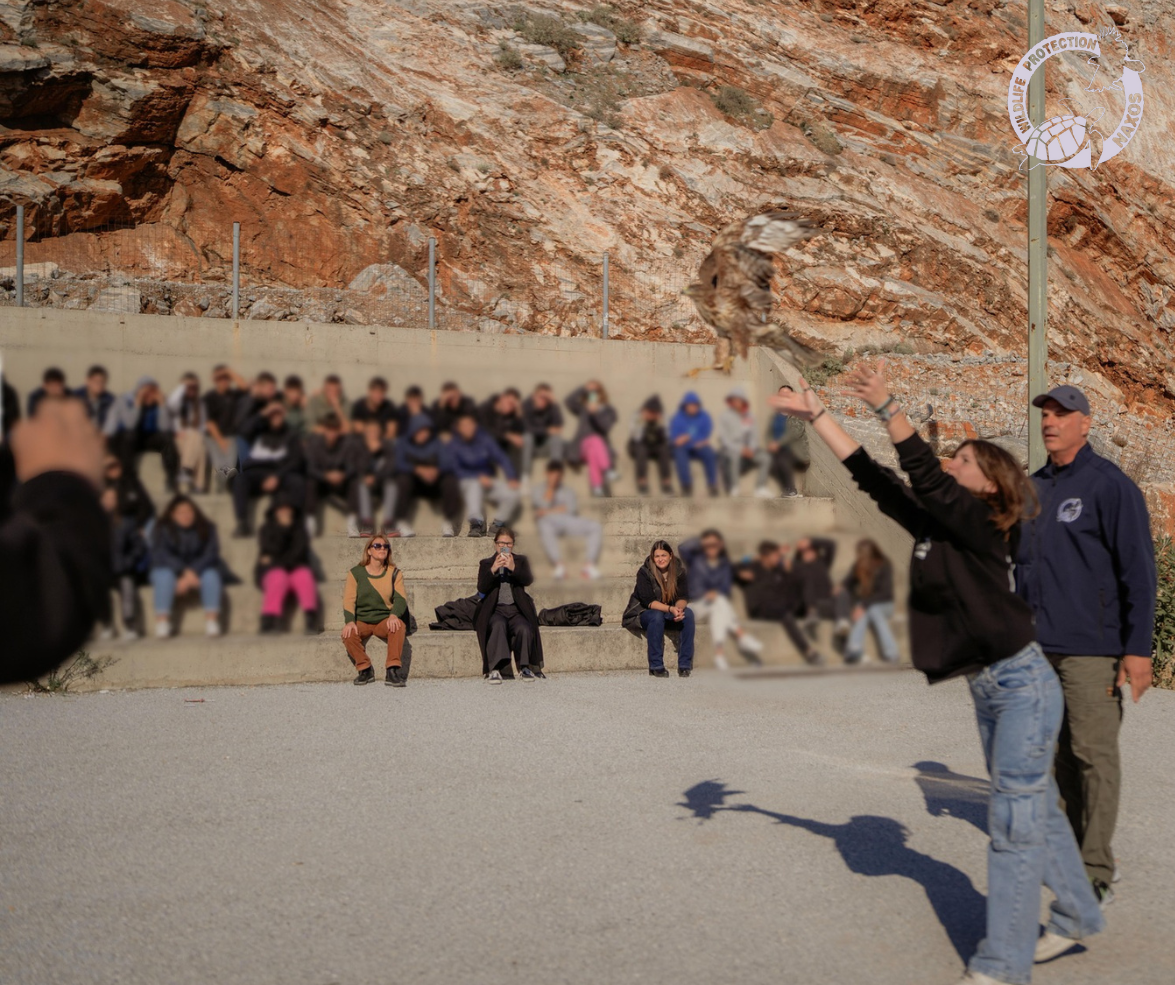
During 2025, we visited 11 schools and delivered educational programs on wildlife and environmental protection to more than 550 children aged 3 to 18. Additionally, we launched the project “Sea Turtle First Responders” through which we informed and educated travellers from around the world on how to assist sea turtles in the Cyclades.
Since 2019, our Association has been developing the Network for the Protection of Sea Turtles in the Cyclades with the cooperation and support of Cyclades Preservation Fund. As part of this initiative, last autumn we visited the island of Ios.
Sea Turtle Nests
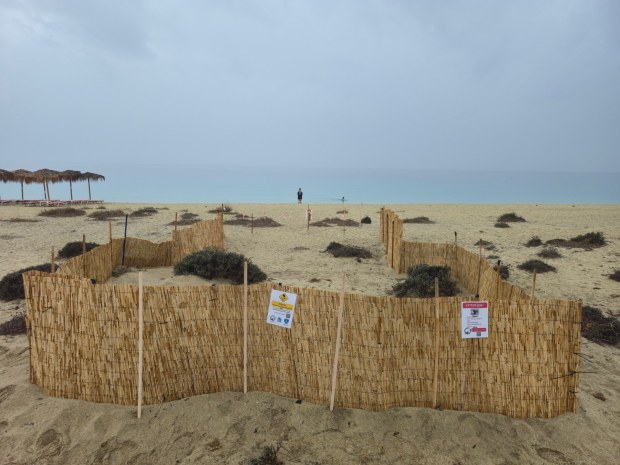
Members of Naxos Wildlife Protection recorded four sea turtle nests on Naxos: two belonging to the C.caretta, both in Mikri Vigla, and two belonging to the Chelonia mydas, found in Apollonas and Agios Prokopios.
The hatching success rates were 91%, 98.7%, 93.2% and 85.8%, respectively.
In total, 368 hatchlings successfully reached the sea.
Click here to read our article on the first green turtle nesting recorded in the Cyclades, published in the Med Turtle Bulletin 8 – November 2025.
We sincerely thank everyone who stood by us and supported our work. Let’s not forget that the protection of nature and wildlife is a collective effort and only together can we truly make a difference.

