
English/Ελληνικά
24-HOUR WILDLIFE RESCUE PHONE NUMBER: +30 697 679 7070
Sea Cucumbers,
an important but underrated animal of the greek seas
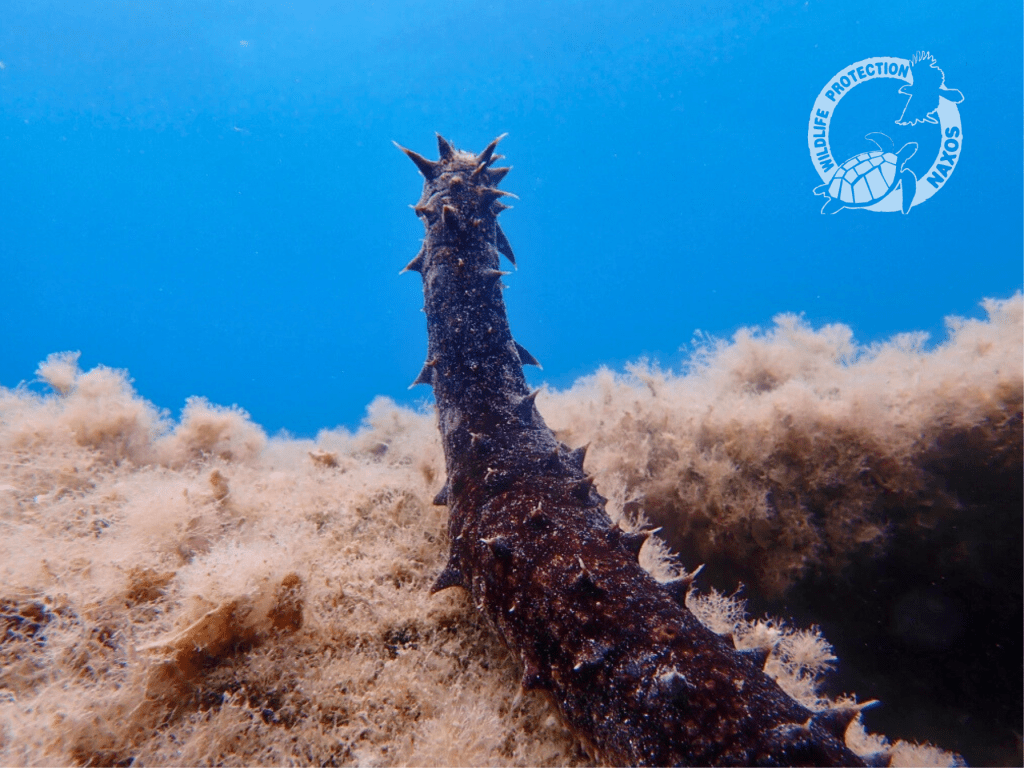
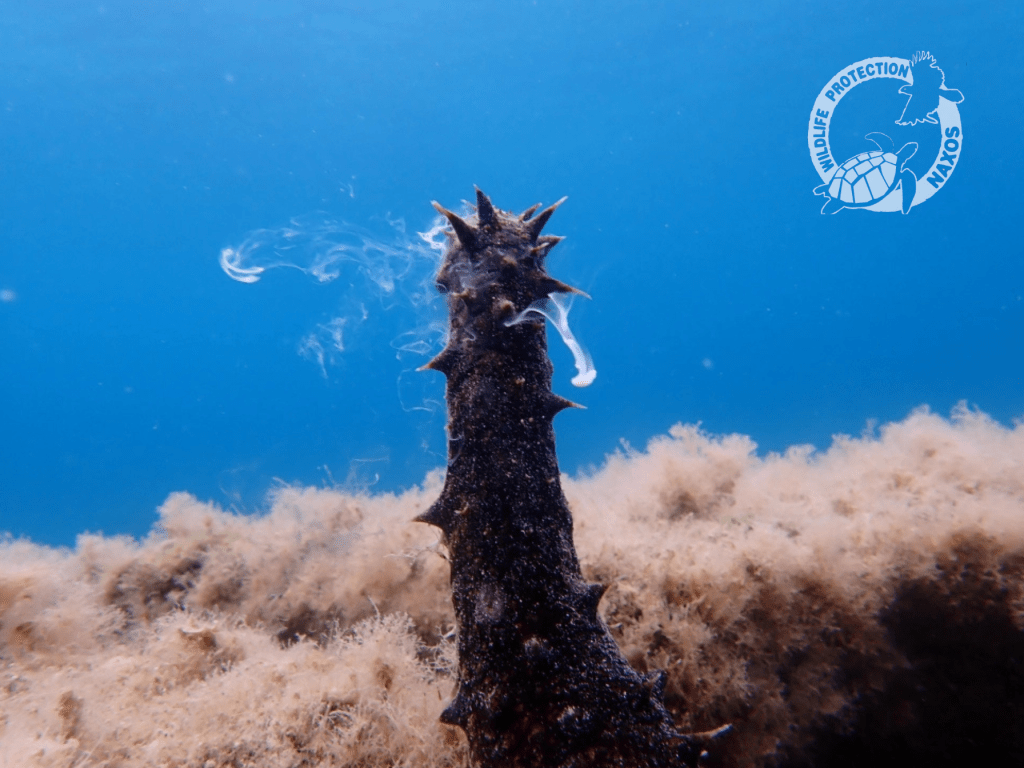
Sea cucumbers, also called Holothurians are large worm-like marine animals belonging to the phylum of Echinodermata along with sea urchins and starfish.
The majority of their species are benthic dwellers and deposit-feeders, meaning they live on the sea floor and feed on algae and organic matter in the benthic substrate, filtering and recycling nutrients.

Sea cucumbers feed by stirring up the sediment, i.e. plowing it, oxygenating and cleaning the bottom from dead matter, thus contributing to the improvement of the quality of the sand.
In addition, they belong to the diet of sea turtles, crustaceans, sharks and rays.

In recent years, however, there has been strong interest in their fishing, due to the increased demand from Asian countries for consumption and medicinal use. However, due to the lack of information regarding the biology of these organisms, the estimation of their population and the absence of legislation which actually protects them, there is now an overfishing of holothurians at a global level. In fact, overfishing has already had negative effects on their populations, such as the reduction in the number of big sized individuals and even extinction of species in small-scale areas.

In the seas of Naxos and the Cyclades, especially during the winter months almost on a daily basis, with all that this entails, the fishing of sea cucumbers is observed with divers using hose to breathe which supplies air from the surface, where the fishing boat fishes even a few meters from the shore, on reefs and meadows of the sea plant Posidonia oceanica, sensitive ecosystems and areas where our known sea turtles also live and feed.
Under the Presidential Decree 48/15-5-2018 fishing of species of the genus Holothuria for use as bait or for human consumption is permitted. This fishing is allowed from 1st of November to the 30th of April with a maximum number of 400 sea cucumbers per boat per day and a minimum weight of 180 g (each sea cucumber).
Unfortunately, however, as we can all perceive, even this very flexible legislation is not respected, as the insufficient controls and the greed of some professional fishermen, have disastrous effects not only on the populations of the sea cucumbers themselves, but also on the already heavily burdened infralittoral zone, which is subject to so many anthropogenic pressures.
Life once thrived in the marine area of our favorite beaches, but all these species are now drastically decreasing and disappearing.
If the Holothurians disappear, as their overfishing will lead to, we will be faced with a sea floor like mud, which with every wave and movement will increase the turbidity of the water column and make our beaches from crystal clear to look like mud. This in turn will create almost prohibitive conditions for the development of the endangered sea plant Posidonia oceanica, but also the rest of the marine organisms that live near the coasts, making our once rich sea even poorer in life, biodiversity and quality.
 Naxos Wildlife Protection